Yerba Mate Powder Extracts
Yerba Mate is a plant originally from the subtropical region of South America, present in the South of Brazil, North or Argentina, Paraguay and Uruguay. It was mostly consumed by native South American Indians with the intuit of giving energy and strength before performing harsh activities or going to war. Nowadays the aqueous extract of Yerba Mate is consumed at a rate of more than 1 liter per day by millions of people and constitutes the most alternative to coffee and tea . This product is prepared mainly as chimarrão in the south of Brazil and tea worldwide.
YERBA MATE CULTURE AND PROCESSING
Yerba Mate culture has great economic and social importance, once it is carried through by a great number of small producers and cooperatives. The genetic improvements of the culture are recent; having begun in the 1970s in Argentina and in the 1990s in Brazil. They have been focused mostly the adaptation, production of green mass and resistance to plagues and diseases.
SUSTAINABILITY AND ECONOMICAL ASPECTS
From an economic point of view, it is important to emphasize that Brazil is second largest producer of yerba mate in the world. There are no current reliable data on the area destined for the cultivation and exploitation of yerba mate in Brazil, but it is estimated to be of 700 thousand hectares distributed in about 180 thousand properties located in approximately 480
municipalities. It is true, however, that the South region is the largest producer of yerba mate and accounts for about 97% of national production.
.
Regarding the environment, it is important to emphasize that the activity of yerba extractivism can be considered as one of the responsible for the maintenance of a large part of the forest fragments that still exist in the Araucaria Forest and for the conservation of Ilex paraguariensis genotypes. Yerba Mate extractivism is one of the most sustainable extractive activity
in the country. It is also worth mentioning that the production systems of cultivated herbs are one of those least damaging for the environment.
.
Yerba Mate cultivation has show to be exceptional for the environment. Levels of Nitrogen and Phosphorus in the soil are so low after crops, that it looks like virgin ecosystem. These results show that Yerba mate not only does not harm the environment as it is safe and secure for surrounding populations. In Brazil, the planters have adopted an agroforestry
model, increasing productivity and benefiting even more the ecosystem. This model consists in growing other trees alongside the mate trees, providing shades for the leaves and extra organic material to improve the soil. Having two or more roots in same space also reduce erosion maintaining soil fertility. International NGOs have seized upon agroforestry as a sustainable and income-generating solution, and shade-grown yerba mate is a primary example. The World Wildlife Fund started a program in 2001 to create forest corridors that linked previously fragmented forest areas by using yerba mate to secure the buy-in of local communities and funding local female-owned cooperatives. Around the same time, local cooperatives started to help the indigenous community with organic and eco-friendly production practices . Finally, one of the biggest cooperatives seeded 856 hectares with around 1.3 million mate seedlings as part of a broader World Bank project to reforest the South Brazilian rainforest. It is estimated from a social point of view, that yerba mate extractivism has generated around 700,000 jobs from 1990 to 2000s.
.
YERBA MATE BENEFITS
Traditionally, yerba mate has been used as a stimulant for mental and physical fatigue due to the presence of caffeine in leaves as well as small amounts of theophylline and theobromine; stimulants that are also found in coffee and cocoa. In addition, yerba mate contains vitamins A, B1, B2 and C, plus minerals
such as phosphorus, iron and potassium . Furthermore, the presence of flavonoids such as rutin, quercetin and kaempferol, and the identification of chlorogenic acid and caffeic acid phenol compounds, gives Yerba mate an anti-inflammatory and antioxidant quality. Recent research confirms the capability of the antioxidant, anti-inflammatory, and antimutagenic of the extract of Yerba Mate to modulate the expression of some genes related to obesity and its ability to reversing abdominal obesity, leptin resistance and hypertriglyceridemia, suggesting that this product is an ideal complement for the management of obesity. Furthermore, the U.S. Food and Drug Administration considers Yerba Mate a safe yerba plant in safe food list GRAS (Generally Recognised As Safe).
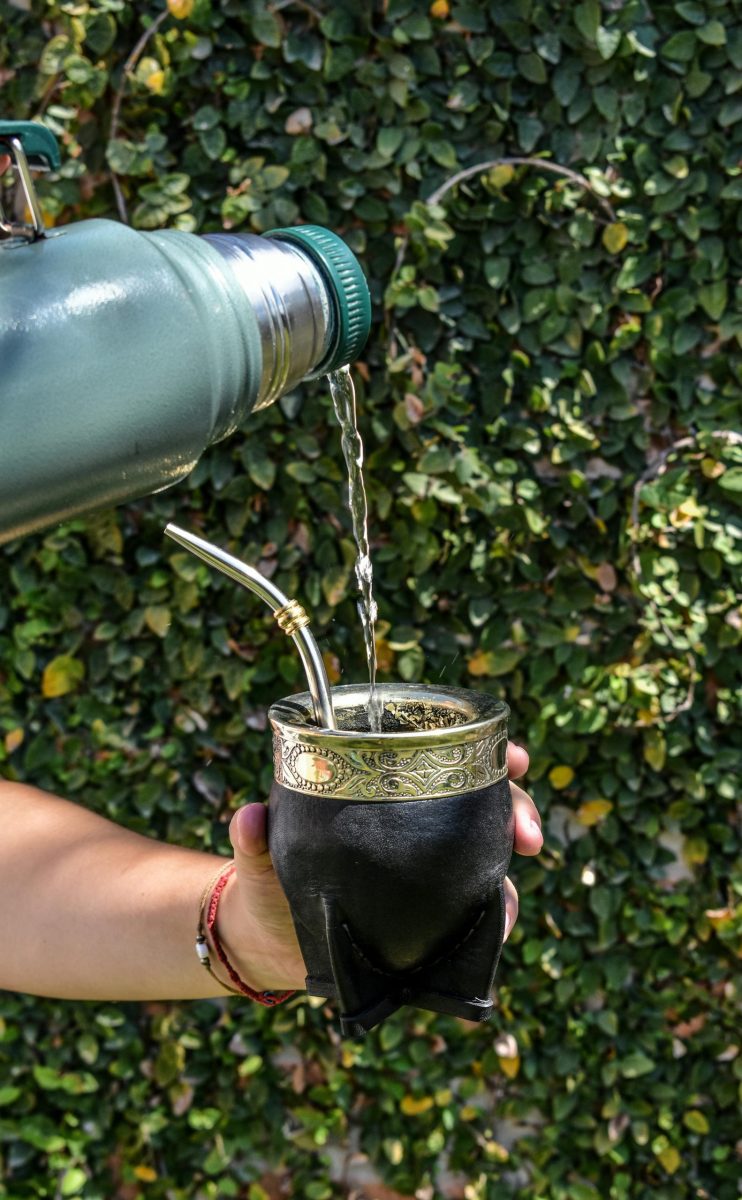
Yerba Mate Powder can be consumed cold or hot with milk and honey or iced with lemon, ginger or mint, the combinations are limitless.